
Management commentary on demand environment, and forward guidance will be in focus when Indian IT services players declare their September quarter results for financial year 2024-25 (Q2FY25). The industry is exepected to have continued on the path of recovery in Q2, similar to the preceding quarter, rather than sprint towards growth. The top four firms likely grew between 0 per cent and 4 per cent year-on-year (Y-o-Y), according to consensus estimates.

Infy's cash utilisation may play role in whether valuation gap too narrows

A robust margin performance in the September quarter (Q2FY25) led to a 12 per cent rise in the stock of defence major Bharat Electronics (BEL). While the stock has given up most of those gains in the recent market correction, analysts are positive on the company due to its strong order book, new order inflows, and margin trajectory. The near-term trigger has been the operating performance in Q2FY25.

Consumption-related stocks, such as hotels, and quick service restaurants (QSRs), have been hitting the ball out of the park ahead. On the other hand, the Miss World Pageant scheduled for later this year in New Delhi, too, could provide some tailwind to these stocks, especially hotels and aviation. However, analysts suggest investors put their best foot forward and buy these counters only on a decline given the recent rally and economic headwinds.

A nationwide and compulsory switch to BS-VI is due from April 1, 2020. Amid increase in input and other costs, companies had decided to increase the price of their vehicles from January 2020. This is expected to push sales of passenger vehicles by 2 to 4 per cent in December; reportedly, bookings are in that range.

Investors should view any bounce-back in bank stocks as an opportunity to exit the pack, analysts suggested, as the worst may not be over yet. The recent quarterly results of HDFC Bank and Axis Bank disappointed the Street, triggering a marketwide selloff by foreign institutional investors, especially in banking counters. While HDFC Bank, which was the anchor for the market correction during the past week, ended 2 per cent higher amid short covering on Wednesday, Axis Bank's shares settled 3 per cent lower.
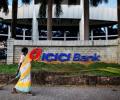
An in-line ICICI Bank result for the quarter ended March 31, 2024, has led to analysts raising target price and earnings per share (EPS) forecast on the stock. ICICI Bank, they said, appeared least vulnerable to regulatory action on its digital offerings or for risk monitoring lapses.

The rupee depreciated 39 paise to an all-time low of 82.69 against the US dollar in early trade on Monday as elevated crude oil prices and risk-averse sentiment among investors weighed on the local unit. Moreover, a negative trend in domestic equities and firm American currency sapped investor appetite, forex traders said. At the interbank foreign exchange, the rupee opened at 82.68 against the greenback, then slipped further to 82.69, registering a fall of 39 paise over its previous close.

The rupee depreciated further by 13 paise to hit a new life-time closing low of 82.30 against the US dollar on Friday as a firm American currency and risk-averse sentiment among investors weighed on the local unit. Moreover, a negative trend in domestic equities and elevated crude oil prices sapped investor appetite, forex traders said. At the interbank foreign exchange market, the local currency opened at 82.19, then fell further to 82.43. It finally settled at an all-time low of 82.30 against the American currency, registering a decline of 13 paise over its previous close.
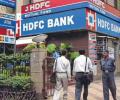
This will be the lender's first result after its merger with HDFC Ltd, effective from July 1, and will keep analysts glued to the management's earnings growth guidance for the merged financial behemoth.

Almost 80 per cent of all income losses during the first wave of the pandemic in 2020 were incurred by the private sector in India, while in many other countries the entire loss was on respective governments, a report said on Wednesday. While the Centre had announced a Rs 21 lakh crore COVID-19 relief package, comprising 10 per cent of the GDP, the actual financial support was only about 2 per cent of GDP, as the rest was all credit-driven. "Almost four-fifths of all income losses during the pandemic in 2020 were incurred by the private sector in the country, while the government sector bore only about a fifth of the losses.

Investor wealth zoomed over Rs 10.48 lakh crore in two days as the Budget-driven market euphoria continued to charge bulls on Tuesday.

'Like all long-term bull markets, the Indian stock market will continue to climb the proverbial wall of worry.'

The rally in PSBs, analysts feel, was more a knee-jerk reaction to the development, and the actual benefits will start to accrue once the addition takes place in 2024. "The actual benefit for banks from the inclusion in JP Morgan's EM Index will accrue from June 2024 onwards. "Until then, the larger fundamentals of the market will dictate the moves. "Once the initial euphoria subsides, bond markets will look to global cues which may trigger fresh selling," said Siddharth Khemka, head of retail research, Motilal Oswal Financial Services.

There has been a sharp recovery in the headline corporate earnings in the April-June 2023 quarter (Q1FY24), after a dismal showing by early bird companies. The combined net profit of the 983 listed companies that have declared their quarterly results, so far, was up 64.7 per cent year-on-year to record a high of Rs 2.68 trillion in the first quarter, but growth in earnings remained lopsided because most of the incremental gains came from a handful of companies. Moreover, the quarterly numbers showed a continued slowdown in revenue growth.

Market sources said other brokerages are also looking to streamline their business models as market volatility, along with increasing competition, has taken a toll on earning yields.

Ask rediffGURU and PF expert Milind Vadjikar your insurance, stocks, mutual fund and personal finance-related questions.
Vedanta Limited (Vedanta) helping its parent and group holding company Vedanta Resources to deleverage its balance sheet has started to strain its balance sheet. Vedanta's gross debt (consolidated) was up 24.3 per cent year-on-year (YoY) in FY23 and reached a six-year high of Rs 66,628 crore by the end of March. Similarly, its net debt went up 20.3 per cent YoY to Rs 45,706 crore at the end of FY23, up from Rs 38,228 crore a year ago; it was the highest since FY20.

Wondering if you did the right thing with your mutual fund investments?

The firms settled the charges by paying a total of $1.8 million.

Reliance Industries accounted for Rs 6.3 trillion in wealth created since 1995; closest rival was Hindustan Unilever which was at Rs 4.9 trillion.

Despite a healthy March-May quarter (Q3FY22) show by global IT consulting firm Accenture, Indian IT companies shed up to 3 per cent on the National Stock Exchange (NSE) on Friday as analysts continued to highlight medium-term pain points for the sector. The Nifty IT index settled 0.9 per cent lower on Friday, as against a 0.9 per cent rise in the Nifty50 index. According to analysts at ICICI Securities, Accenture's Q3 saw moderation in year-on-year growth rate across verticals and US regions, which signals at likely normalisation in revenue momentum for Indian IT services going forward.
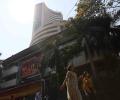
Currently, trades on the Indian stock exchanges are settled within two days, just like most major markets such as Singapore, Hong Kong, Australia, Japan, and South Korea. Indian exchanges, however, will be moving to T+1 settlement from February 25 in a phased manner.

According to the Sebi circular, commodities that require price control measures will be less conducive for the derivatives market.

With the markets scaling new highs, as many as 43 stocks from the Nifty50 index and 27 of the 30 scrips that are part of the S&P BSE Sensex are trading above their respective 200-day moving average (DMA). The 200-DMA is seen as one of the most relevant trend indicators by investors and traders, who believe that stocks and indices trading above this level possess strength and are likely to rally in the short to medium term, while the ones trading below this level are viewed as bearish and expected to see a sell-off. Wipro, UPL, Kotak Mahindra Bank, Hindalco, Infosys, Cipla, and Adani Enterprises are the only stocks from the Nifty50 pack that are still below their respective 200-DMA, the exchange data suggests.

India's corporate sector is likely to report a slowdown in revenue growth and earnings for the July-September 2023 period (Q2FY24), according to earnings estimates by brokerages, after the country's top listed companies posted higher than expected profits for the first quarter. The combined net profit of Nifty50 companies, based on brokerage estimates, is expected to have grown by 19.6 per cent year-on-year (Y-o-Y) to Rs 1.75 trillion in Q2FY24 - a sharp deceleration from 37.6 per cent Y-o-Y growth in the combined earnings of index companies in the April-June 2023 period. According to estimates, the combined earnings in the second quarter would be down 8.8 per cent on a quarter-on-quarter (Q-o-Q) basis and the lowest in the past three quarters.

The Reserve Bank of India's latest order prohibiting Bajaj Finance from sanctioning and disbursing loans under its 'eCOM' and 'Insta EMI Card' products may not have serious implications on the non-banking finance company's profitability, provided the ban is lifted within six to eight weeks, analysts said. "In a surprise move, the RBI has asked Bajaj Finance to stop sanction and disbursal under two of its digital lending products. "While the move is negative, the speed of correction will be key to reinstate products," global brokerage Jefferies said in a report.

Jio is planning to win over 350 million 2G feature phone users by launching a smartphone at a fraction of the current cost.

The rupee tumbled 19 paise to close at a fresh lifetime low of 77.93 against the US dollar on Friday as rising crude oil prices and unabated foreign capital outflows soured sentiment. A sell-off in equity markets and stronger greenback overseas also weighed on the domestic unit, forex traders said. At the interbank foreign exchange market, the local currency opened at 77.81 and witnessed an intra-day high of 77.79 and a low of 77.93 against the US dollar.

At the 45th Annual General Meeting of Reliance Industries (RIL) in August, chairman and managing director (CMD) Mukesh Ambani described the company as an "unputdownable book" with never-ending chapters of success. "Reliance grew from strength to strength because we internalised the founder's mindset of purpose, philosophy and passion," he said. Wednesday marked the 90th birth anniversary of RIL founder Dhirubhai Ambani.
Analysts believe that investors should look at stocks that hit 52-week lows only if they have a dividend paying track record, are debt-free and have sound fundamentals.

'We expect the bull run to continue until economic growth continues.'

Over the past one-and-half years, the number of stocks trading below their respective face value has increased 29 per cent after a sharp correction in stocks of small-cap companies.

Omkeshwar Singh, head, Rank MF, a mutual fund investment platform, answers your queries.

Despite the best ever quarterly net profit of Rs 3,091 crore during April-June of financial year 2023-24 (Q1FY24), challenges are mounting for InterGlobe Aviation-run IndiGo in the near term, said analysts. Given this, most brokerages have retained their ratings from 'buy to underperform', as well as their target price for the stock. For instance, Motilal Oswal Financial Services has retained its 'neutral' rating on the scrip as it believes the low-cost airline is facing teething issues at present.

Since the Union Budget, gold has become costlier by 8-9 per cent because of a 2.5 per cent increase in import duty to 12.5 per cent and about a 5 per cent depreciation in the rupee.
.jpg)
Declining prices of food items like vegetables pulled down retail inflation to 5.59 per cent in July, bringing it back within the RBI's comfort zone after two months, official data showed on Thursday. The retail inflation based on the Consumer Price Index (CPI) had remained above 6 per cent during May and June. The government has mandated the RBI to maintain retail inflation at 4 per cent, with a margin of 2 per cent on either side. The CPI based inflation stood at 6.26 per cent in June 2021 and 6.73 per cent in July 2020.
Shares of ICICI Bank may outperform those of HDFC Bank in the near-term, analysts said recently, after the Sandeep Bakhshi-led private sector lender reported a strong set of numbers for the July to September quarter (Q2) of financial year 2023-24 (FY24). The result, they said, reiterated that ICICI Bank is maintaining a sustainable and prudent growth led by tech-driven initiatives as against HDFC Bank, which is facing merger related challenges. According to analysts at Prabhudas Lilladher, ICICI Bank is valued at par with HDFC Bank at 2.2x/1.9x on FY25/26E core adjusted book value (ABV) basis.

International brands such as Daikin, Hitachi and Samsung, which were largely present in the premium products range, are getting aggressive on expanding their mid-range portfolios to penetrate into smaller cities and towns. While competition isn't hurting Voltas just yet, which has managed to retain its market share at 24.4 per cent as of September 30 (Q2), the main question is whether the company can defend its market share without compromising on profitability.

The rupee plunged 90 paise to close at an all-time low of 80.86 (provisional) against the US dollar on Thursday after the US Federal Reserve's interest rate hike and its hawkish stance weighed on investor sentiments. Forex traders said the US Fed's rate hike and escalation of geopolitical risk in Ukraine sapped risk appetite. Moreover, the strength of the American currency in the overseas market, a muted trend in domestic equities, risk-off mood and firm crude oil prices weighed on the rupee.
 © 2026 Rediff.com - Advertise with us - Disclaimer - Privacy Policy - Sitemap - Feedback - About us - Terms of use - Grievances